Learn about cannulated Bobe awls, their design features, intended orthopedic applications, and important quality considerations. This guide helps hospitals, medical distributors, and bulk buyers understand what to check before purchasing specialized surgical instruments.
Orthopedic surgery relies on specialized instruments designed to support accuracy, controlled handling, and procedural requirements. A cannulated Bobe awl is a specialized instrument whose hollow or channelled construction distinguishes it from a conventional solid awl. Its suitability depends on the product's design and the intended surgical technique.
For hospitals, orthopedic centers, and surgical instrument distributors, understanding the instrument's specifications is essential before placing an order. When evaluating a Cannulated Bobe Awl Manufacturer and Bulk Supplier in Delhi, buyers should focus on product design, material information, manufacturing consistency, and documented quality checks rather than price alone.
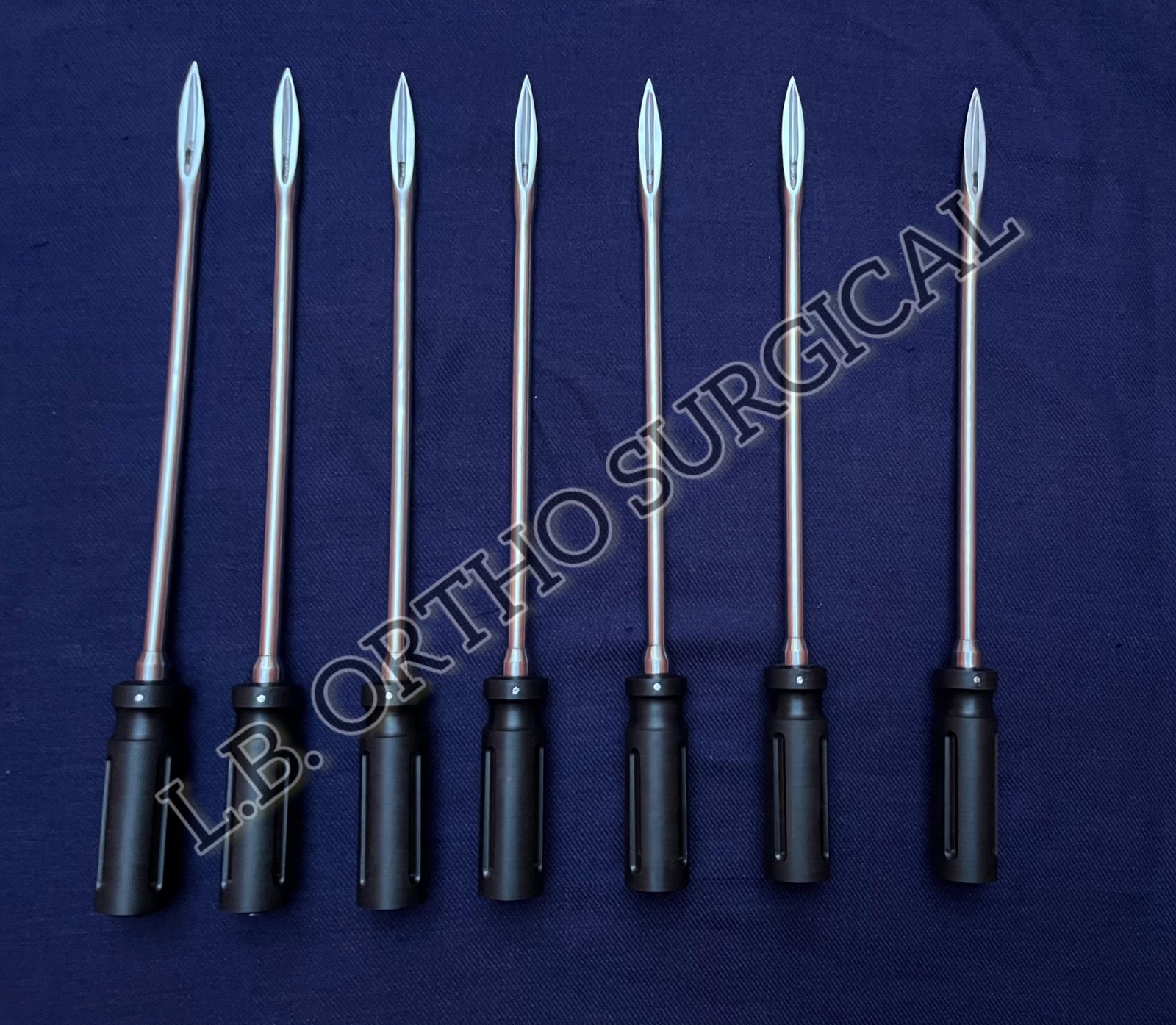
A cannulated awl has a channel running through some or all of its length. Depending on the specific design, this channel may accommodate a guidewire or support a particular instrument-guidance technique.
A Bobe awl is a specialized instrument name, so buyers should confirm the exact model, intended application, and technical details with the manufacturer. Not every cannulated awl has the same dimensions or function.
The instrument should be selected by qualified healthcare professionals according to the procedure and the manufacturer's instructions.
The construction of a cannulated awl involves several important components. Each should be checked against the stated product specifications.
1. Cannulated Shaft
The channel within the shaft is a defining feature. Its diameter, alignment, and finish should correspond to the instrument's documented design. Buyers should verify compatibility with any guidewire or associated equipment required for the intended technique.
2. Working Tip
The working tip is designed for the instrument's specific application. Its geometry and dimensions influence how the instrument is intended to engage with the surgical site. Exact specifications should be confirmed before procurement.
3. Handle and Grip
The handle should support controlled handling by the intended user. Its shape, balance, and surface finish are relevant design considerations for surgical instruments.
4. Overall Construction
The instrument should be inspected for visible defects, irregular surfaces, and inconsistencies with the product description. Quality checks should cover the relevant features of the particular model.
Material quality is an important consideration when sourcing orthopedic instruments. Suitable stainless-steel grades are commonly used for reusable surgical instruments, but the exact grade and properties should be confirmed for each product.
A reliable Cannulated Bobe Awl Manufacturer and Bulk Supplier should be able to explain the instrument's material specifications, finishing process, dimensional checks, and applicable quality documentation.
Buyers should review:
Material grade and product specifications.
Cannula dimensions and alignment.
Working-tip design and finishing.
Handle construction and overall dimensions.
Inspection procedures and traceability records.
Instructions for cleaning, sterilization, and maintenance.
These checks help purchasing teams assess whether an instrument is appropriate for its intended use. Product claims and certifications should be verified using relevant documentation.
The channel and working tip are important features of a cannulated instrument. Differences in dimensions or construction can affect compatibility with associated equipment and the instrument's suitability for a particular technique.
Before ordering, healthcare buyers should confirm the model number, measurements, intended application, and any compatibility requirements. They should not assume that products with similar names are interchangeable.
A manufacturer should provide sufficiently clear technical information for buyers to distinguish between available models and confirm that the requested product matches their requirements.
When comparing suppliers, procurement teams should consider more than the catalogue and quoted price. Manufacturing capability, product consistency, documentation, and delivery reliability all matter.
A Cannulated Bobe Awl Manufacturer and Bulk Supplier in Delhi may be evaluated using the following checklist:
Product range: Does the supplier offer the required model and specifications?
Quality controls: Are inspection procedures documented and relevant to the instrument?
Technical information: Can the supplier clarify dimensions, material, and intended use?
Order capacity: Can the requested quantity be supplied within the agreed timeframe?
Communication: Are quotations, order confirmations, and delivery updates clear?
Documentation: Are applicable certificates and product records available for verification?
For medical distributors, maintaining consistent product specifications across repeat orders can also make stock management and customer service easier.
A bulk order requires clear specifications and realistic delivery expectations. Buyers should identify the exact instrument model, quantity, packaging preferences, and documentation requirements before requesting a quotation.
A Cannulated Bobe Awl Manufacturer and Bulk Supplier should be asked to confirm minimum order quantities, estimated lead times, shipping arrangements, and the process for handling discrepancies. These details help prevent misunderstandings and support more predictable purchasing.
Price comparisons are most useful when the quotations cover equivalent products and specifications. A lower quotation should not replace checks on suitability, quality documentation, and supplier reliability.
The term Cannulated Bobe may appear in product searches and supplier catalogues, but the name alone does not establish a product's precise design or clinical application. Buyers should obtain the manufacturer's technical description and confirm that the instrument corresponds to the required model.
Healthcare professionals must select and use surgical instruments according to the intended procedure and appropriate clinical guidance. Reusable instruments should be processed in line with validated manufacturer instructions and the facility's infection-control procedures.
1. What is a cannulated awl?
A cannulated awl is a surgical instrument with a hollow channel through its shaft. Depending on the model, the channel may support a guidewire-based technique or another specified surgical application.
2. What should I check before purchasing a Bobe awl?
Confirm the model, dimensions, material specifications, channel compatibility, working-tip design, and available quality documentation. The intended clinical application should also be verified.
3. Can hospitals and distributors place bulk orders?
Yes. Hospitals and distributors can enquire about bulk purchasing by providing the required model, quantity, specifications, and delivery requirements. A Cannulated Bobe Awl Manufacturer and Bulk Supplier can then clarify availability and provide a quotation.
4. How can I verify a manufacturer's quality claims?
Request applicable certificates, inspection records, product specifications, and material documentation. Verify that the records relate to the supplier and product being considered.
5. Why is the exact product model important?
Products with similar names may differ in their dimensions, construction, and intended use. Confirming the exact model helps buyers avoid ordering an instrument that does not meet their requirements.
Selecting a specialized orthopedic instrument involves careful consideration of design, material, compatibility, and quality documentation. Buyers should compare verified product specifications and supplier capabilities before making a purchasing decision.
A dependable Cannulated Bobe Awl Manufacturer and Bulk Supplier in Delhi should provide clear technical details, transparent purchasing information, and reliable communication. Careful evaluation helps healthcare organizations and distributors make informed procurement decisions.